
ASHEVILLE, N.C. — The remnants of Tropical Storm Fred were soaking the Northeast on Thursday as Southern states assessed the damage from severe flooding, which in North Carolina had left two people dead and 20 missing.
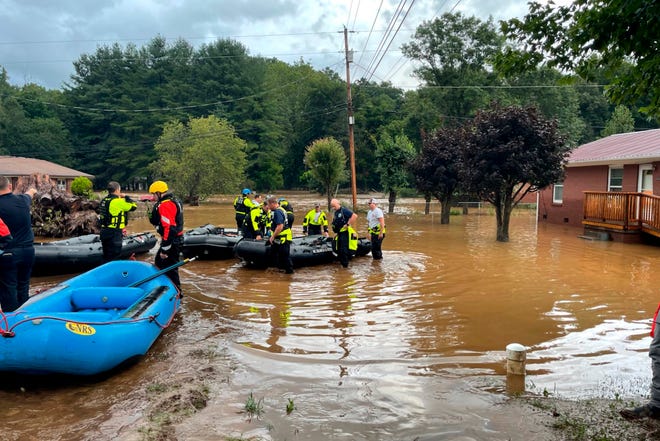
Gov. Roy Cooper declared a state of emergency as Western North Carolina saw intense flooding, with nearly 100 people having been rescued, after Fred drenched the state as a tropical depression earlier in the week. Cooper and U.S. Sen. Thom Tillis planned to tour the damage from the floods Thursday.
Meanwhile, Fred could bring up to 5 inches of rain from New York across New England on Thursday, according to the National Hurricane Center. Flash flood watches were in effect for much of New York, Vermont, New Hampshire and parts of Maine.
The Hurricane Center also warned a tornado was possible, and the National Weather Service issued tornado warnings across several New York counties throughout the Hudson Valley early Thursday.
In North Carolina and West Virginia, power had largely been restored after about 37,000 customers were without electricity Wednesday, according to the utility tracker poweroutage.us. However, about 20,000 customers in Pennsylvania and New York didn't have power, the tracker reported.
Monday and Tuesday marked the heaviest two-day rainfall in more than 50 years in Buncombe County, where Asheville is located, while neighboring Haywood County was seeing the worst effects from the storm, Cooper said during a press conference Wednesday.
More from North Carolina:Tropical Depression Fred prompts state of emergency, with 35 missing in Haywood County

As of Thursday morning, 20 people were unaccounted for in Haywood County, said Allison Richmond, the county's emergency services spokeswoman. The number of missing had been at 35 on Wednesday evening, but several people were determined to be safe and reunited with family, she said.
Richmond also confirmed the two fatalities and said officials were still working with the medical examiner on identifications.
Damage to roadways and bridges was significant, with at least 10 to 15 bridges damaged or destroyed, she said. About 200 search and rescue personnel were on missions Thursday, going home to home along the Pigeon River.
“We have homes that are completely destroyed and off their foundations,” Sheriff Greg Christopher added. “Mobile homes that were moved, and mobile home parks that I would call completely destroyed.”
In Buncombe County, there were about 70 water rescues and 911 call centers fielded double the typical volume of calls in a 24 hour period, spokesperson Lillian Govus said.
The storm also caused rockslides and downed trees, including on the Blue Ridge Parkway.
The popular national park, which winds directly through Asheville, was almost completely closed in Western North Carolina during the peak of the storm Tuesday, said spokesperson Leesa Brandon. Much has been cleared since, but the most of the main corridor through Asheville remained closed Wednesday, Brandon added.
Videos shared on social media also showed a river in the Pisgah National Forest with waters raging as river levels rose from the rainfall.
“What really caught us by surprise was how quickly the water rose, the tremendous amount, and intensity of it,” said Zeb Smathers, mayor of the town of Canton, where water rescues also occurred.
Hurricane and COVID-19:Here's what you need to protect yourself.
Fred has been blamed for at least one other death after a driver hydroplaned and flipped into a ditch near Panama City, Florida.
The storm roared ashore Monday near Cape San Blas in the Florida Panhandle as a tropical storm. Fred flooded streets, knocked down power lines and trees and destroyed houses, mobile homes and other buildings across the South during its march north.
The storm also caused more than a dozen tornadoes in Georgia and the Carolinas, according to the National Weather Service.
Two other storms, Hurricane Grace and Tropical Storm Henri, were active in the Atlantic. Grace made landfall in Mexico on Thursday while Henri could be a threat to the Northeast early next week.
Contributing: Karen Chávez, Asheville Citizen Times; The Associated Press